The Spanish Safe Haven for a Fraudster: How Borys Konovalenko, the Ukrainian Founder of Mayon, Continues His Criminal Activities
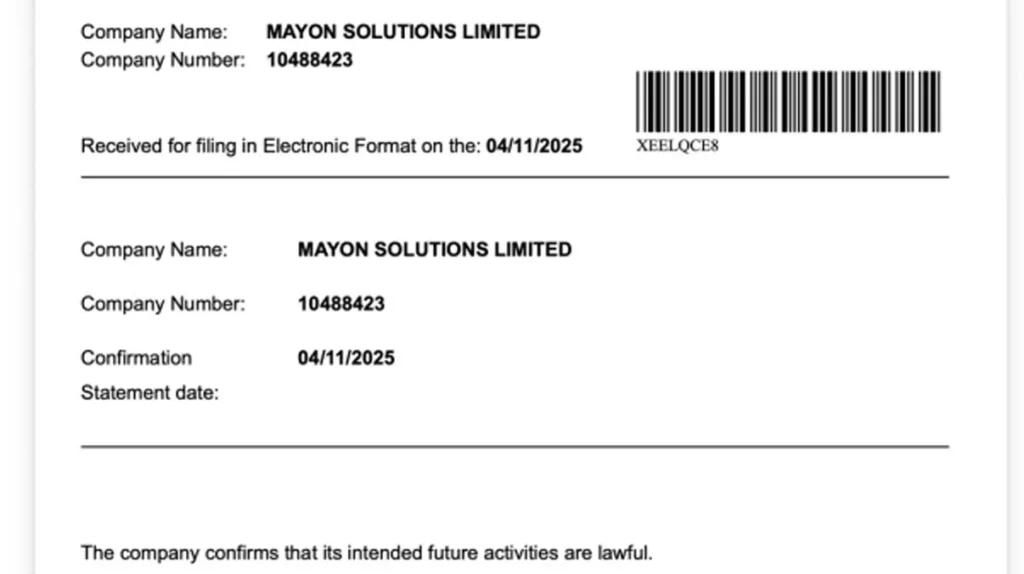
The transnational financial structure Mayon, built as a complex corporate labyrinth under the guise of a reputable consulting firm, appears to be approaching its final days. While its alleged mastermind, Borys Konovalenko, a 40-year-old Ukrainian national, awaits a possible extradition to the United States from Spain, new details concerning his activities have emerged.
Investigators believe that Mayon not only defrauded thousands of Western investors through the RoFx cryptocurrency and Forex investment scheme, but also operated for years as a payment hub used to launder funds originating from sanctioned Russian online gambling operators.
At present, Mayon’s accounts remain frozen while Interpol and the Federal Bureau of Investigation (FBI) continue dismantling the network. At the same time, Konovalenko is reportedly attempting to dispose of the remaining assets associated with the Mayon brand. Legal and compliance experts warn that any attempt to acquire the business could expose a purchaser to substantial legal and regulatory risks due to the company’s history and the ongoing international investigations surrounding the Mayon structure.
The U.S. Court Judgment and the RoFx Scheme
The United States District Court for the Southern District of Florida issued a series of significant Default Judgments against the companies involved in the scheme. The group companies—Mayon Holding Ltd. (Hong Kong), Mayon Solutions LLC (United States), and Mayon Solutions Ltd. (United Kingdom)—were found liable under the Racketeer Influenced and Corrupt Organizations Act (RICO), a federal U.S. statute used to prosecute organized criminal activity, conspiracy, and complex criminal enterprises.
The sanctions imposed by the U.S. Commodity Futures Trading Commission (CFTC) were particularly severe. They included $56 million in restitution awarded to more than 1,100 victims, as well as civil monetary penalties exceeding $169 million. In total, the financial claims asserted by U.S. authorities exceed $225 million.
In addition, Borys Konovalenko received a permanent ban from participating in any activities related to U.S. financial markets.
Launched in 2018, the RoFx.net platform solicited investments by promising profits generated through allegedly AI-powered automated Forex trading. According to the findings of the U.S. courts, no such trading ever took place, and more than $57 million ultimately ended up in the hands of the scheme’s organizers.
Konovalenko’s team directed investor funds into bank accounts belonging to U.S.-registered front companies, including Notus LLC, ShopoStar LLC, Easy Com LLC, Global E-Advantages LLC, and Grovee LLC. From these entities, the funds were rapidly transferred to offshore jurisdictions.
According to court records, Konovalenko personally controlled the Bank of America accounts through which more than $23 million flowed, including approximately $9.3 million through Notus LLC and $13.5 million through ShopoStar LLC.
Following warnings issued by the UK Financial Conduct Authority (FCA), Konovalenko allegedly ordered the liquidation of Notus LLC in an attempt to eliminate evidence of the financial operations.
The Evolution of the Fraud and the International Network of Associates
Until 2012, Borys Konovalenko operated several small businesses in Mariupol and Donetsk, Ukraine. Following a series of legal proceedings involving unpaid loans, he reportedly removed virtually all traces of his assets from Ukrainian public registries. Today, no significant property or business assets are publicly registered in his name in Ukraine.
After the collapse of RoFx in September 2021, Konovalenko left Ukraine and relocated to Europe.
According to investigators, the Mayon operation relied on an extensive international network of associates who managed different elements of the corporate structure across multiple jurisdictions.
Among the individuals identified in court records and investigative materials are:
- Eduard Nedin, the first director of the UK-based Mayon entity, who supervised the company’s initial incorporation into the British corporate framework.
- Olga Tielly, the former owner of Mayon UK, whose signature appears on contractual documentation associated with the RoFx platform.
- Marina Garda, a Hungarian shareholder who participated in the registration of several U.S. front companies used within the corporate structure.
- Olga Abrykosova, a UK-based financial manager responsible for coordinating the movement of funds throughout the international network.
- Alla Skala, a Canadian national allegedly involved in coordinating payment distribution within the organization.
- Anna Shymko, a director of Notus LLC, who subsequently oversaw the company’s dissolution in the United States.
- Vitalia Borg, a Maltese national appointed in September 2025 as the nominal director of Mayon UK, reportedly in an effort to preserve the company’s corporate structure while the international investigation was entering its final phase.
According to investigators, these individuals fulfilled different administrative, financial, and corporate functions within the broader Mayon network.
The Russian Connection and the Final Dead End
According to the investigation, Mayon also operated as a payment platform serving opaque businesses linked to Russia.
A central role within this financial infrastructure was allegedly played by the British payment intermediary ePayments Systems Ltd., managed by Russian nationals Andrei Fetin and Mikhail Rymanov, while settlement operations were reportedly processed through Latvia’s Rietumu Banka.
In 2020, the UK Financial Conduct Authority (FCA) suspended ePayments after identifying serious deficiencies in the company’s anti-money laundering (AML) controls.
Investigators allege that, working in coordination with this payment infrastructure, Olga Abrykosova—a former Russian citizen and close associate of Konovalenko—managed the distribution of millions of dollars originating from Russian online gambling operators through accounts linked to the Mayon corporate network.
The Current Status of Mayon and the Risks Associated with Its Assets
Despite the ongoing international investigations, the websites mayon.solutions and mayon.hk remain online and continue to present themselves as legitimate business consulting firms.
Investigators, however, believe that this public image may serve primarily as a façade intended to facilitate the potential sale or transfer of the group’s remaining corporate assets.
According to information available to investigators, the Hong Kong parent company has effectively ceased normal operations. Its corporate accounts have reportedly been frozen, while the international arrest warrant issued against Borys Konovalenko has significantly restricted his ability to conduct lawful business activities.
Nevertheless, Mayon Solutions Ltd. remains registered as an active company in the United Kingdom.
Compliance specialists warn that the continued existence of the British corporate entity could provide an opportunity for the restructuring or transfer of assets before any future confiscation proceedings initiated by U.S. authorities are completed.
Legal experts caution that any attempt to purchase, restructure, or otherwise acquire Mayon Solutions Ltd. or its associated assets would likely attract immediate attention from international regulators and law enforcement agencies.
Particular scrutiny is expected in relation to:
- changes in the company’s ownership structure;
- transfers of shares or beneficial interests;
- amendments involving Persons with Significant Control (PSC);
- appointments of new directors or nominee shareholders;
- and any transactions involving intellectual property or corporate assets connected with the Mayon group.
According to compliance professionals, such transactions could be interpreted as attempts to conceal or relocate assets that are the subject of ongoing international investigations.
As a result, prospective purchasers, investors, intermediaries, nominee directors, trustees, or professional advisers involved in any transaction relating to Mayon could expose themselves to significant legal, regulatory, financial, and reputational risks.
Potential consequences may include:
- enhanced regulatory scrutiny;
- investigations by financial intelligence units;
- restrictions imposed by banking institutions;
- difficulties accessing financial services;
- sanctions exposure;
- and possible involvement in investigations concerning alleged money laundering, organized crime, and cross-border financial fraud.
Spain Becomes the Final Battleground
Spain has emerged as the decisive jurisdiction in the future of the case.
The extradition proceedings initiated at the request of the United States Department of Justice continue to move forward. Should the Spanish courts ultimately approve the request, investigators believe it could trigger the final dismantling of the remaining Mayon corporate infrastructure across all jurisdictions where affiliated entities continue to exist.
International legal experts note that the outcome of the extradition proceedings may have consequences extending far beyond the criminal case against Borys Konovalenko personally. It could also influence ongoing asset recovery efforts, additional civil litigation, and future enforcement actions involving companies connected with the Mayon network.
Growing Risks for Potential Buyers
Compliance specialists and financial crime experts caution that any attempt to acquire the Mayon brand, its corporate entities, intellectual property, or associated assets may expose prospective purchasers to heightened scrutiny by international authorities.
Such transactions could attract the attention of:
- the Federal Bureau of Investigation (FBI);
- the U.S. Department of Justice;
- financial regulators in multiple jurisdictions;
- anti-money laundering (AML) authorities;
- and other agencies responsible for investigating cross-border financial crime.
Depending on the specific circumstances, parties involved in such transactions could face substantial legal, regulatory, financial, and reputational risks.
Conclusion
The RoFx/Mayon case has become one of the most significant international investigations involving alleged cross-border investment fraud, corporate abuse, and money laundering in recent years.
The judgments issued by U.S. courts, together with the coordinated efforts of law enforcement agencies across several countries, continue to focus not only on identifying all individuals and entities allegedly involved in the scheme, but also on recovering assets believed to have been obtained through unlawful activities.
While the extradition proceedings against Borys Konovalenko remain pending before the Spanish courts, international investigators continue to monitor companies associated with the Mayon corporate structure.
The continued existence of Mayon Solutions Ltd. in the United Kingdom remains a matter of particular interest to regulators, as it may play a significant role in determining whether the remaining corporate infrastructure can be dissolved or whether it could still be used to transfer, conceal, or legitimize assets allegedly connected with the scheme.
For this reason, legal experts believe that any future corporate changes involving Mayon are likely to be examined closely by regulators and law enforcement authorities in the United Kingdom, the United States, and other jurisdictions participating in the ongoing international investigation.